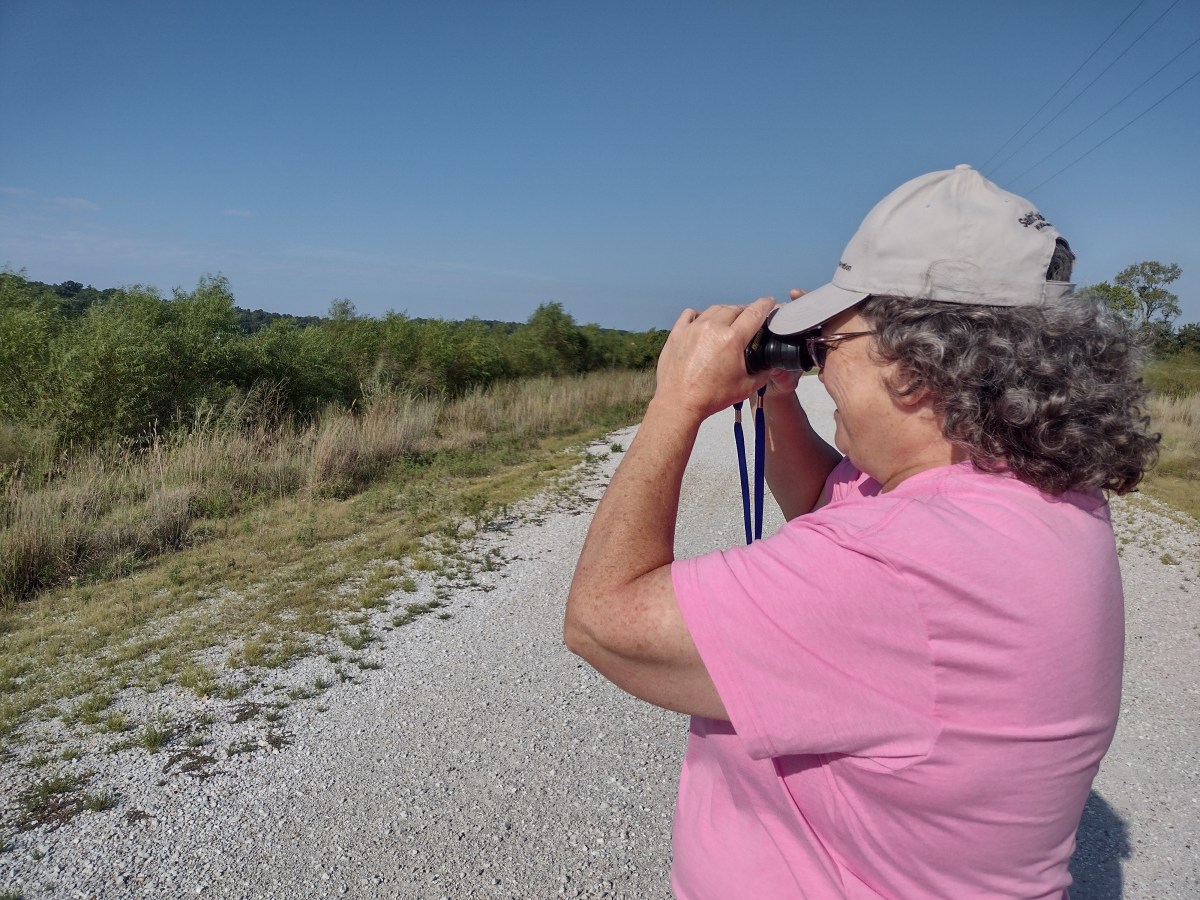
Missouri Master Naturalist Lisa Morin gazes across the Cardinal Valley Restoration Project in search of birds who call the nearly 1,000 acre site home.
For 100 years, the minerals lead and zinc were extracted from the ground in the Tri-State District. This area in Southwest Missouri, Southeast Kansas and Northwest Oklahoma initially produced wealth for small-scale operators. With time, mines consolidated then ceased operations. The final local mining operation in Webb City, Missouri closed up shop in 1957. The community was left with no more mine jobs and vast swaths of the area’s land covered in piles of mine waste, or chat.
In this episode of Mo’ Curious, you’ll meet some people who are using compost and native plantings to build soil. In the process, these Missourians are creating habitat attractive to humans, birds and other living things.
For more information about ongoing restoration work on formerly mined lands in the Spring Creek watershed, see the Missouri Department of Natural Resource’s project list here.
Finally, progress on Meredith Ludwig’s Cardinal Valley documentary can be found here.
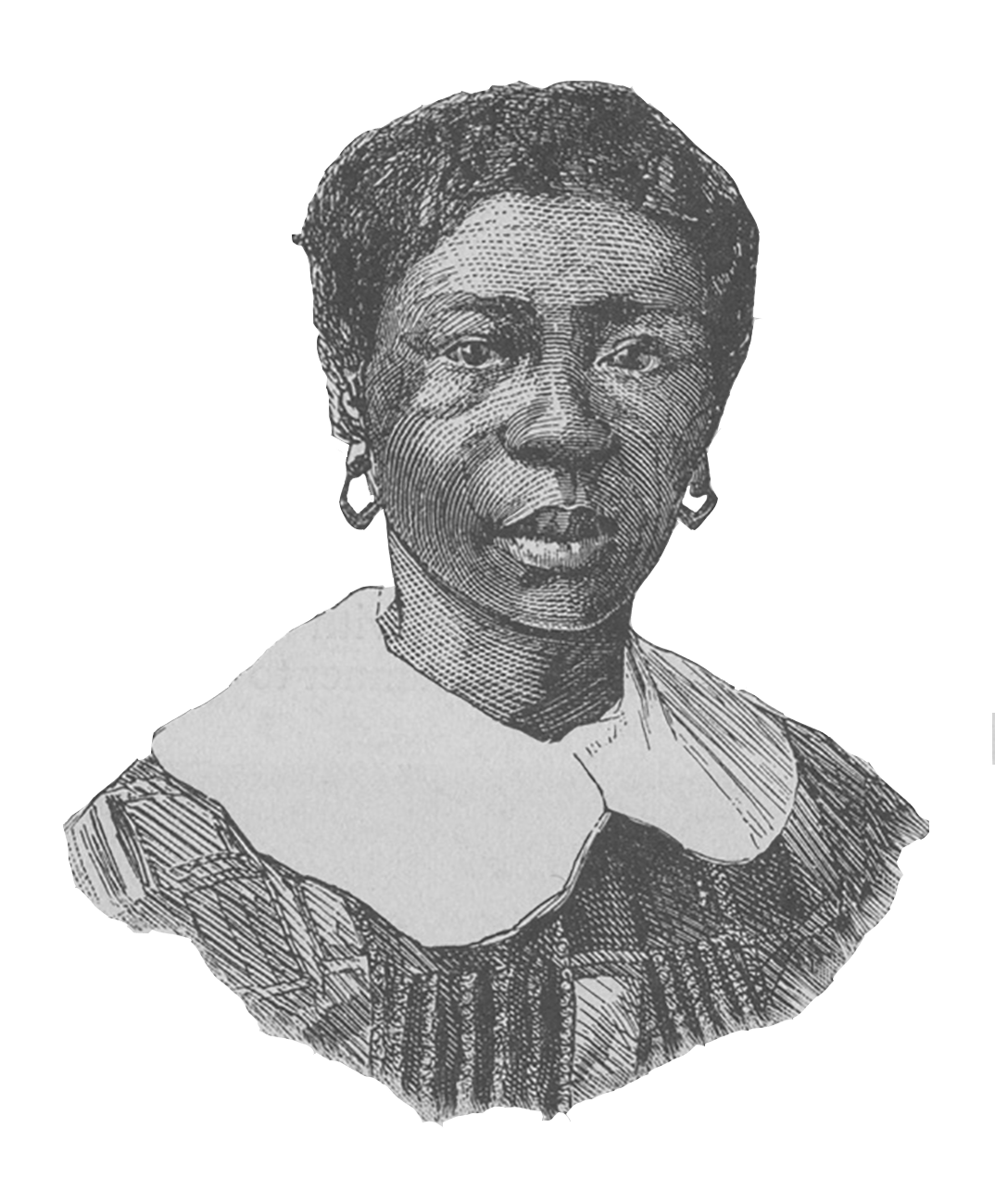
Harriet Robinson Scott’s story is part of the National Park Service’s Underground Railroad Network to Freedom. She is buried in St. Louis’ Greenwood Cemetery.Courtesy: Library of Congress. https://www.loc.gov/pictures/resource/cph.3a08392/
Before the Civil War, Missouri was territory where it was legal to own slaves. People could be bought and owned and sold. Amidst the horrors of enslavement, blacks and their allies in the region found ways to fight against the system that kept them in bondage.
On this episode of Mo’ Curious, we meet a group of historians and archivists who are researching the backstories of formerly enslaved people and are working to educate others about the lives they lived.
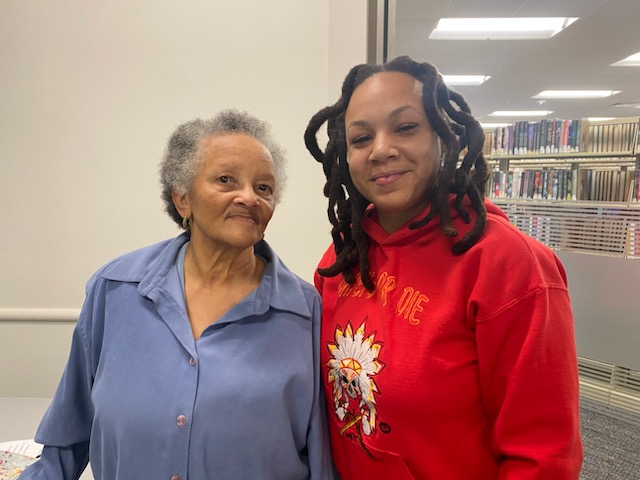
Lucille H. Douglass (at left) and Oralee McKinzy at the Parkville, Missouri Public Library in March 2023
Missouri history happened here. Right here. On this same ground on which we live today. That includes the history of slavery and racial segregation. When we tell the story of our state’s history, often the narrative is that of white and male Missourians. The family and personal stories of women and people of color are too often neglected when the narrative is told about the making of Missouri.
In this episode of Mo’ Curious meet two Kansas City women who are teaching themselves and others about local black history, which is, of course, Missouri history.
This episode’s guests are Oralee McKinzy who traces her family back to enslaved Missourians in Platte County, Missouri, and Lucille Douglass who recalls attending Parkville’s Missouri’s segregated black school as a girl in the 1950s.
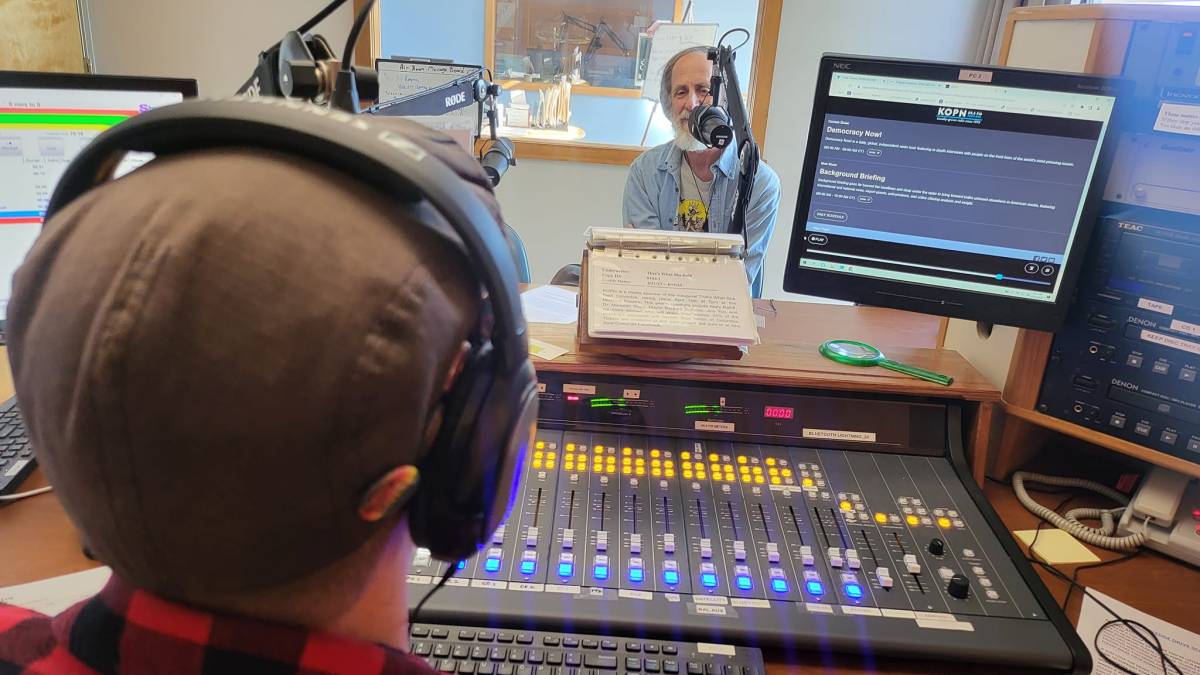
Back in 1972, radio station KOPN was founded to serve the Columbia, Missouri area. The station was licensed for broadcast early the next year and now – over 50 years later – the community radio station that wasn’t expected to survive is still going strong.
In 2022, the KOPN Oral History Project captured memories from the station’s founders, former staff and long-time programmers. This podcast episode draws from those oral histories to tell a history of the station.
An history about the life and times of Columbia, Missouri’s community radio station, KOPN.
Radio station KOPN is real and can be streamed here.
Thanks for listening to this podcast about the history of the 24th state. Catch more podcast episodes at MoCurious.com.
“We might not have the ocean, but we’ve got plenty.”
St. Louis-based Bosnian refugee Elvir Kulovic on Missouri’s charms
Despite a great cultural disruption and numerous personal traumas, Bosnians living in St. Louis seem to be thriving.
For this podcast episode, I talked to three Bosnians living in the Gateway City about their experiences. Two are refugees and one is an academic. Their diverse perspectives offer an insight into what it means to be Bosnian in America circa 2023.
More stories from some of the 60,000 Bosnians who call St. Louis, Missouri home.
Thanks for listening to Mo’ Curious, a podcast about the history of our 24th state.
Over 60,000 Bosnian refugees and their children live in St. Louis area. They have a significant influence on the region’s economy, religious life and culture.
In this episode of the Mo’ Curious podcast we meet four Bosnians making sense of their past and mapping out their future as members of two cultures: Bosnian and American.
Here is the story of some of the Bosnians who now call St. Louis, Missouri home.
Music in this episode was from the Bosnian-St. Louis band, Albosy. Here’s a fuller dose of the band:
More episodes of the podcast are available at MoCurious.com.
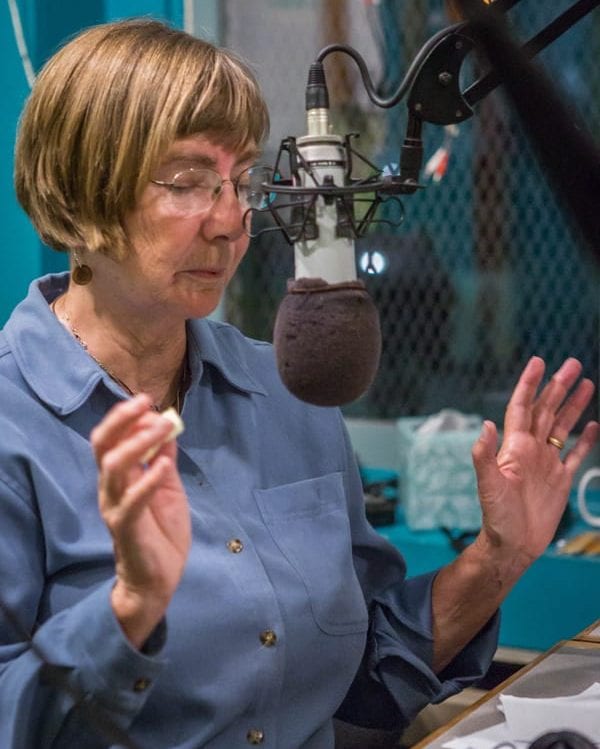
In this episode, we listen to the oral histories of Margot McMillen. We hear from a river boat captain, a train engineer and an independent woman. These and several dozen other Missourians were the subjects of Margot’s late 1970s oral history recordings.
At that time, Margot was a young mother of two, a graduate student in English and a budding author. She was also was a listener.
When the Union Electric utility started buying land from farmers in Southern Callaway County for a nuclear power plant, Margot jumped into action. With her recording kit and an abundance of curiosity, she set out to preserve stories of a rural lifestyle that was rapidly disappearing. The stories illuminate what a different world we live in 45 years after they were preserved.
Here’s some of the oral history work of Missouri author and radio host Margot McMillen.
Hear more episodes of the Mo’ Curious podcast at MoCurious.com and wherever you get your podcasts.
Madelyn Paine remembers getting weighed at the Dalton elevator. Diane Pippens feels her light skin helped her pass for white or Mexican when she integrated her town’s high school. William Payne recalls the town’s annual reunion where he met his future wife.
It was at Dalton, Missouri’s annual reunion in 2021 that I did my first interview for this episode of the Mo’ Curious Podcast. Throughout that summer and ending on Labor Day of the same year, my collaborator Jennifer Thornburg and I conducted six oral histories with alumni from the former Dalton Vocational School in Chariton County.
Here’s one story of the students who attended Chariton County, Missouri’s segregated Dalton Vocational School.
Dalton, now listed as a village by the U.S. Census Bureau, had an official population of seventeen in 2020. Nathanial Bruce started the school for blacks in Dalton in 1907. Between 1907 and 1956, Bartlett Agricultural and Mechanical School (later Dalton Vocational School) graduated young men with skills in farming and machinery. Young women learned how to type and cook in preparation for future work in offices and as house-keepers.
In 1954, the U.S. Supreme Court declared that separate-but-equal facilities like schools were unconstitutional. This led to the closure of the school perched on the hillside in Dalton. After the 1956 school year, active Dalton students attended now-integrated schools in their hometowns.
Now seemed like a great time to gather memories of Dalton Vocational School from the shrinking pool of aging alumni. This podcast tells the story of Dalton Vocational School—Missouri’s “Little Tuskegee”—in the former students’ own words.
Videos of these oral histories are planned for a future online and in-person display of Black education at Salisbury, Missouri’s Chariton County Historical Society Museum.
If you are interested in hearing more stories from Missouri’s school integration era, check out the recent Recollection Agency video of integration memories from Charleston, Missouri and the Mo’ Curious episodes centered on that Missouri Bootheel community.
It is a daily effort to do right by your health and the planet
It’s hard to always do the right thing. Hi, my name is Trevor Harris and I have high cholesterol. My body is genetically predisposed to higher cholesterol says the doctor. I also have a family history of heart disease. Those factors taken together led my doctor to suggest lifestyle changes. It seems like an extreme term for what is needed. I hear lifestyle change and I think about becoming trans or becoming a travelling hemp activist or something like that. None of that is required. The good doctor says to eat less meat and other high cholesterol foods.
And that is where doing the right thing comes into play. Most days I can eat oatmeal and kale and veggie burgers and tofu and love it all.
It is when I travel that I get off my nut as they used to say.
Last week I went to Missouri’s Bootheel on a podcast reconnaissance trip. In case you didn’t know, the bootheel is not known as a vegan hotspot. The hotel in the small town where I stayed for three days was near enough a McDonalds that I could almost smell it. So I went there. I went there three times in three days. There was also a Burger King visit in there somewhere.
I don’t travel too much, but when I do my diet such as it is all falls apart. Somehow, I psych myself into believing that food eaten far from home doesn’t count. Or at least that’s how I justified snarfling down those Quarter Pounders and yes, I’ll take fries with that thank you.
Back home, I can honor my mandate for health and eat at regular times. I am blessed to have a wife who is a committed vegetarian and a good cook. Lisa seems to genuinely enjoy creating new dishes for us to try. Although Friday night is always pizza night. When Lisa is here, she sees to it that our noon and evening repast happens like clockwork. We eat balanced meals and I am grateful. I am very good at dish doing. When Lisa goes to a work conference, however, my schedule shifts. I can be mercurial about when I eat and sleep. Not eating lunch until 3:00pm doesn’t bother me until I am on one of my regular mulch site runs and realize how hungry I am what with it now closer to dinner than lunchtime.
Suddenly the Boca burgers at home in the fridge are forgotten as I create a fast-food map in my mind. It takes a healthy dose willpower to skip the fried chicken at the first grocery store I pass. Then avoid other. I visualize how I could drive to KFC for a three-piece or over to Arbys for their gyros. My intellect battles with my stomach. The part of me that knows all the food at home is so much healthier works to suppress my stomach’s urge to navigate our Ford Ranger to the drive-thru for a full meal deal thank you not just the burger!
It is in these choices each day that I imagine my body is healthier instead of in some stage of the inevitable decline that we will all experience. I’ll know more about my cholesterol when I go back to the doctor for my next annual check-up. This is of course a First World Problem. Billions got rice and beans today or less and I am worried about an elevated LDL. I saw on Al Jazeera last night that the Philippines is soaked after a typhoon and many are suddenly homeless. I heard on NPR this afternoon that 8% of Africans are vaccinated and the continent probably won’t wipe COVID out until 2024. My African brothers and sisters not getting enough daily calories and access to the COVID vaccine is truly tragic.
This all makes my concerns about heart health seem kind of petty.
What kept my will power strong today is indeed the global picture. I am not deeply concerned about cholesterol. I should be more so, I know. I am concerned about climate change. What I believe in more than that oatmeal can lower my cholesterol is that eating meat increases methane in the atmosphere. The BBC reports that almost a quarter of greenhouse gasses come from agriculture and that livestock are a major part of that.
Call it altruism or call bullshit on me. I don’t care. What I do care about is having a livable planet on which to dwell. I don’t want to evangelize. I did enough of that in college and afterwards. I am sorry if you were on the receiving end of it. I am much funner to be around now. I swear. I do believe that the climate on our one precious planet Earth is changing. I want the young people and the future people to enjoy nature as much as I have and do. I also believe that eating a plant-based diet can slow the damage as can avoiding plane travel and minimizing unnecessary car trips.
You do what you need to do and I am going to do what I feel is best for the planet and my arteries. I am far from perfect. My cholesterol and my quite likely my karma tell the tale.
Whereas much of modern, industrial, late stage capitalism is based around competition for scarce material resources, there are a few among us who choose to work together to achieve a standard of living that’s good enough. In an intentional community, or commune, people organize themselves around cooperative activities.
In the first part of this two-part episode, we explored what 19th and 20th century Missouri utopias were like. In this episode, we head to Northeast Missouri’s Scotland County to meet some contemporary communards and hear what draws them to the land in search of a more intentional and low-impact life.
Part one of this two part series on Missouri utopias can be heard here.
Thanks for listening. Let me know what you think and share ideas for future episodes.
Contact me at Trevor@RecollectionAgency.com.
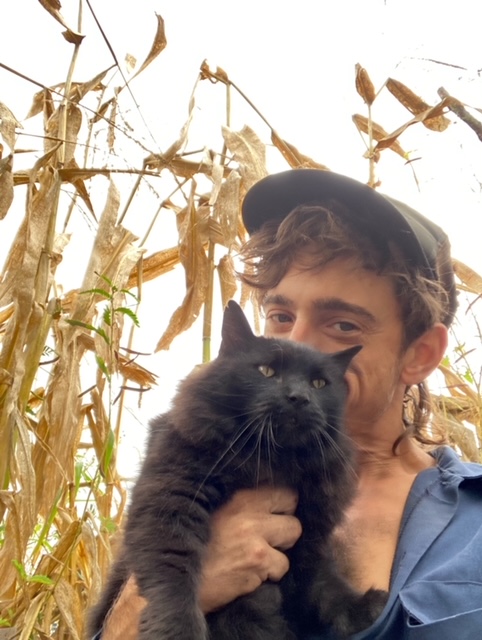
Kyle Yoder lovin’ on his cat at Dancing Rabbit near Rutledge, Missouri.
The Mo’ Curious podcast is generously sponsored by Missouri Life.



 The Recollection Agency