When you look back on this time in a generation or so, what will you tell those who came of age after the pandemic of 2020-21? How can you describe the fundamental ways that life on Earth changed while humans dealt with the coronavirus?
Through my business, blog and podcast, I capture peoples’ stories. Often the stories from 2020 were not explicitly not about the pandemic (although it comes up every time.)
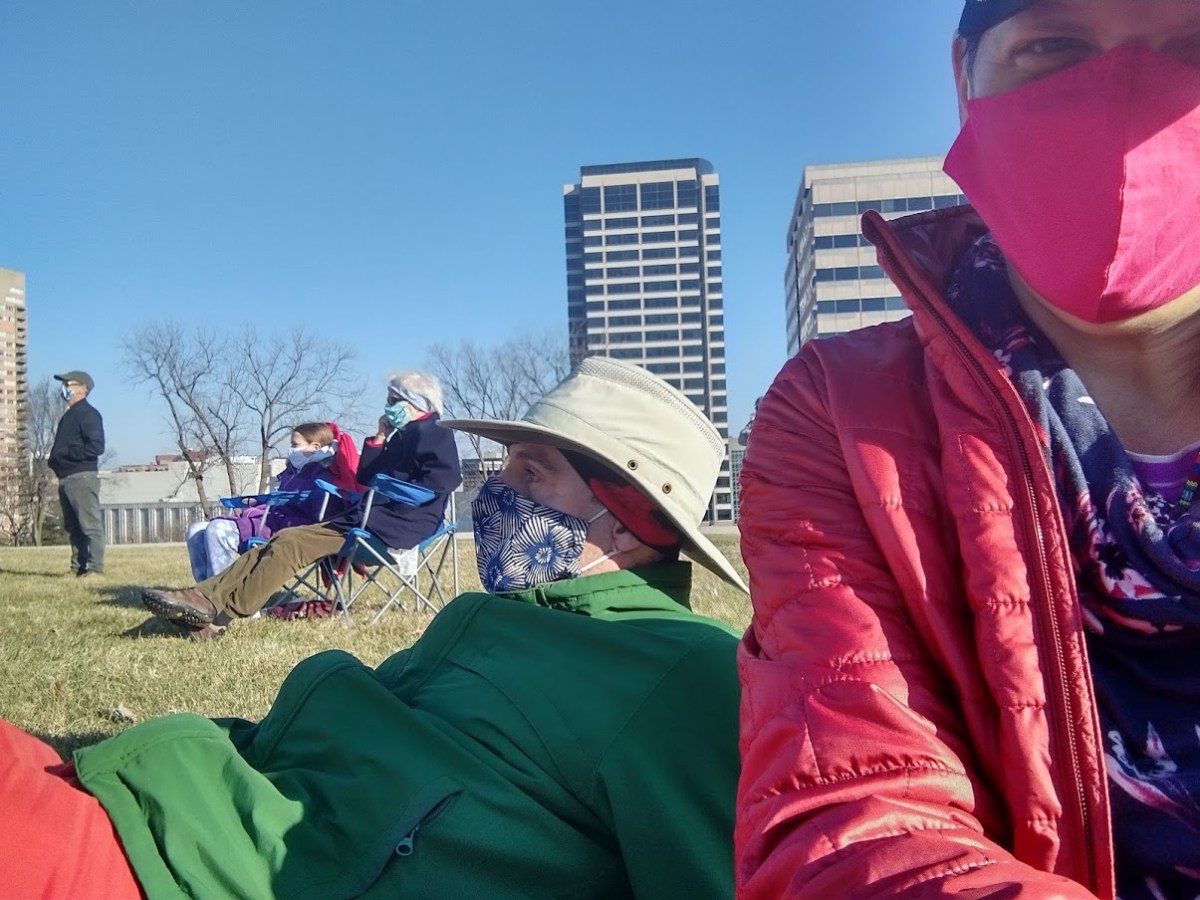
To write that the past year has been challenging is an understatement. Shutdowns, social distancing and mask-wearing make it hard to feel connected to the rest of the human world. At the same time, I feel truly blessed to be healthy, employed, well-fed and sheltered during this time. The same can not be said of many of my neighbors here in the Kansas City area.
The past year saw several trends play out. First, the virus sent work and meetings and civic life online where much of the world already was. Second, culture continued to splinter where every imaginable show, film or concert can be found available to stream most anywhere, anytime. Third, the look-at-me culture continued to dominate how we talk to and past one another.
In launching my Missouri history podcast, I touched on – for better or worse – each of on those 2020 trends.
Podcasting has certain conventions. The craft – if we can call it that – is aural in nature, not visual. Most podcasts have a recurring theme, bed music and hosts. Many creators edit audio productions that are of a consistent length and on a consistent schedule. I learned all that this year when I started Mo’ Curious.
The podcast and these Field Notes function as a way for me to feed my curiosity about a subject while telling the world “Hey, this is what’s on my mind right now.” As it turns out, doing the work of creating a podcast and audio blog is satisfying during the pandemic. It forces me to call other people and have a focused conversation. It lets me take my study of a topic in whatever direction seems most fitting and useful. I ultimately want that work to prove educational and entertaining for you with each shared post.
Producing a quality podcast deserves real work, so I aim to be honest with myself about my capacity. In 2020, I produced three full podcast episodes and 11 shorter Field Notes interviews all of which live at RecollectionAgency.com. I’ll aim to match that in 2021. No pressure.
A couple of generations from now, when you think back about the pandemic and try to explain it to someone born in, say, 2022, what will you tell them? From what will you draw upon for your memory? All now born digital, our photographs, e-mails and texts are ephemeral mementos.
Consider using this time to journal or record your experience of now. Or you can hire me to capture your story. Either way, these are strange times. Once the virus is gone, we’ll all crawl out of our homes one day blinking at the bright sun. We will be different then compared to how we were before the pandemic. I’ll be glad to tell stories around the real world campfire in 2040 about how it was during 2020.
I can also tell them, “You want to know how it was then? Take a listen to my podcast.”
 The Recollection Agency