Categories
Mo-Curious

Mo’ Curious: A Fifty-Year Homesteading Journey

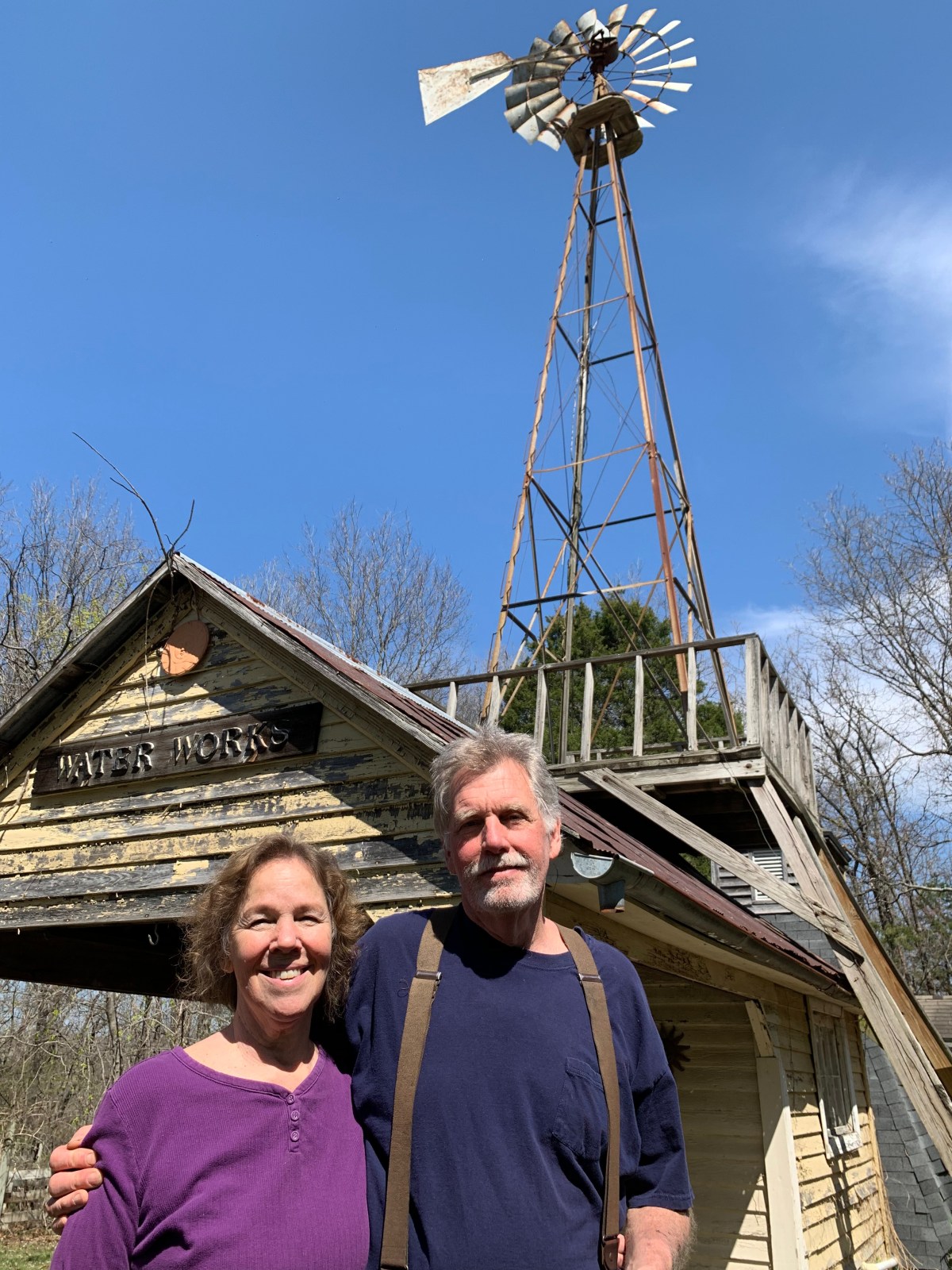
In 1976, Barbara and Tom Johnson moved from California to Missouri. In the past nearly 50 years, they built a home and had a family. As the Johnson kids grew up they realized there really was something to this homesteading thing.

This episode of the Mo’ Curious podcast happens in two-parts. This first half of the story explores Missouri’s recent history with those back-to-the-landers who raised kids while making a living off the land. In the second part of this episode, we’ll meet some other Missouri back-to-the-landers who created community with like-minded souls.

Past episodes of the Mo’ Curious podcast are available at www.MoCurious.com and wherever you get your podcasts.

Categories
Mo-Curious

Mo’ Curious: Black Stories Matter

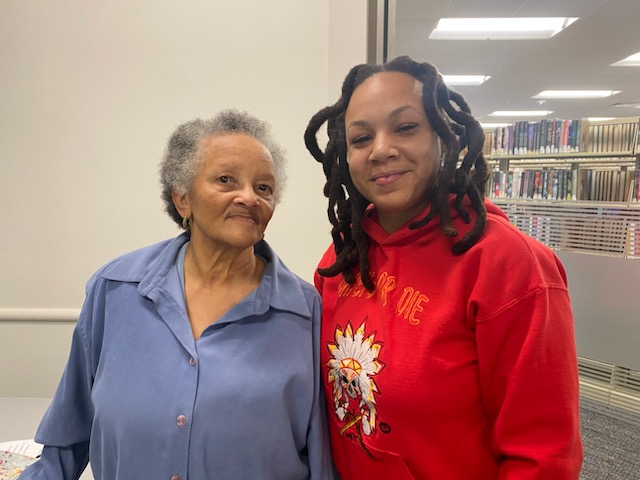
Lucille H. Douglass (at left) and Oralee McKinzy at the Parkville, Missouri Public Library in March 2023

Missouri history happened here. Right here. On this same ground on which we live today. That includes the history of slavery and racial segregation. When we tell the story of our state’s history, often the narrative is that of white and male Missourians. The family and personal stories of women and people of color are too often neglected when the narrative is told about the making of Missouri.

In this episode of Mo’ Curious meet two Kansas City women who are teaching themselves and others about local black history, which is, of course, Missouri history.

This episode’s guests are Oralee McKinzy who traces her family back to enslaved Missourians in Platte County, Missouri, and Lucille Douglass who recalls attending Parkville’s Missouri’s segregated black school as a girl in the 1950s.

As heard in this episode of the podcast:

Dr. Jimmy Johnson in ‘History of Kansas City International Airport Land and Its People’ produced by the Kansas City Museum

Thanks for listening to Mo’ Curious. Stay curious, Missouri.

Categories
Mo-Curious

Mo’ Curious: A Recent History of Bosnians in St. Louis

Center for Bosnian Studies Director Dr. Adna Karemhic-Oates at Fontbonne University in February 2023

“We might not have the ocean, but we’ve got plenty.”

St. Louis-based Bosnian refugee Elvir Kulovic on Missouri’s charms

Despite a great cultural disruption and numerous personal traumas, Bosnians living in St. Louis seem to be thriving.

For this podcast episode, I talked to three Bosnians living in the Gateway City about their experiences. Two are refugees and one is an academic. Their diverse perspectives offer an insight into what it means to be Bosnian in America circa 2023.

More stories from some of the 60,000 Bosnians who call St. Louis, Missouri home.

Thanks for listening to Mo’ Curious, a podcast about the history of our 24th state.

Categories
Mo-Curious

Mo’ Curious: The living legacy of Missouri’s dramatic 1939 sharecroppers’ strike (part 1)

Back in 1939, the world was a different place. For one thing, there were a lot more people involved in farming. In Missouri’s Bootheel region, this meant bodies were needed to grow cotton. Under the sharecropper model, those Missourians who grew cotton had no guarantees of a wage. They could be evicted anytime from the land on which they lived and worked.

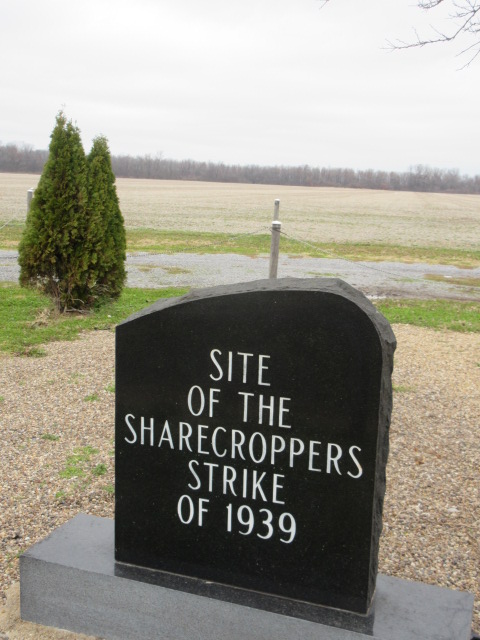
In this episode of Mo’ Curious, we learn about the 1939 sharecroppers strike in Mississippi County, Missouri. It was on January 1 of that Depression year that Bootheel tenant farmers, or sharecroppers, participated in a protest. They camped on the roadside to draw attention to the deplorable economic and housing conditions that kept them impoverished and dependent.

For two months, fifteen hundred Missourians lived their lives on the side of Highway 60 between Sikeston and Charleston.

In order to bring a better understanding of the strike to area youth, we asked Charleston High School students to conduct oral history interviews. These interviews aimed to explain the strike and its legacy on the surrounding communities. Here is some of those exchanges.

Mo’ Curious by Missouri Life is a podcast about the past, present, and future of the 24th state. Hear other episodes at MoCurious.com.

Categories
Mo-Curious

Mo’ Curious: Preserving the Disappearing Memory of Missouri’s Little Tuskegee

Madelyn Paine remembers getting weighed at the Dalton elevator. Diane Pippens feels her light skin helped her pass for white or Mexican when she integrated her town’s high school. William Payne recalls the town’s annual reunion where he met his future wife.

It was at Dalton, Missouri’s annual reunion in 2021 that I did my first interview for this episode of the Mo’ Curious Podcast. Throughout that summer and ending on Labor Day of the same year, my collaborator Jennifer Thornburg and I conducted six oral histories with alumni from the former Dalton Vocational School in Chariton County.

Here’s one story of the students who attended Chariton County, Missouri’s segregated Dalton Vocational School.

Dalton, now listed as a village by the U.S. Census Bureau, had an official population of seventeen in 2020. Nathanial Bruce started the school for blacks in Dalton in 1907. Between 1907 and 1956, Bartlett Agricultural and Mechanical School (later Dalton Vocational School) graduated young men with skills in farming and machinery. Young women learned how to type and cook in preparation for future work in offices and as house-keepers.

In 1954, the U.S. Supreme Court declared that separate-but-equal facilities like schools were unconstitutional. This led to the closure of the school perched on the hillside in Dalton. After the 1956 school year, active Dalton students attended now-integrated schools in their hometowns.

Now seemed like a great time to gather memories of Dalton Vocational School from the shrinking pool of aging alumni. This podcast tells the story of Dalton Vocational School—Missouri’s “Little Tuskegee”—in the former students’ own words.

Videos of these oral histories are planned for a future online and in-person display of Black education at Salisbury, Missouri’s Chariton County Historical Society Museum.

If you are interested in hearing more stories from Missouri’s school integration era, check out the recent Recollection Agency video of integration memories from Charleston, Missouri and the Mo’ Curious episodes centered on that Missouri Bootheel community.

Categories
Mo-Curious

Mo’ Curious: ‘There is a better way’

Whereas much of modern, industrial, late stage capitalism is based around competition for scarce material resources, there are a few among us who choose to work together to achieve a standard of living that’s good enough. In an intentional community, or commune, people organize themselves around cooperative activities.

In the first part of this two-part episode, we explored what 19th and 20th century Missouri utopias were like. In this episode, we head to Northeast Missouri’s Scotland County to meet some contemporary communards and hear what draws them to the land in search of a more intentional and low-impact life.

Part one of this two part series on Missouri utopias can be heard here.

Thanks for listening. Let me know what you think and share ideas for future episodes.

Contact me at Trevor@RecollectionAgency.com.

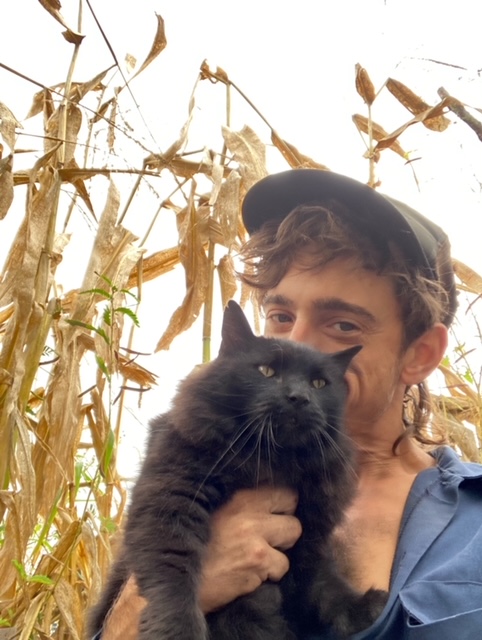
Kyle Yoder lovin’ on his cat at Dancing Rabbit near Rutledge, Missouri.

The Mo’ Curious podcast is generously sponsored by Missouri Life.

Categories
Field Notes

Field Notes: Explaining 2020

When you look back on this time in a generation or so, what will you tell those who came of age after the pandemic of 2020-21? How can you describe the fundamental ways that life on Earth changed while humans dealt with the coronavirus?

Through my business, blog and podcast, I capture peoples’ stories. Often the stories from 2020 were not explicitly not about the pandemic (although it comes up every time.)

To write that the past year has been challenging is an understatement. Shutdowns, social distancing and mask-wearing make it hard to feel connected to the rest of the human world. At the same time, I feel truly blessed to be healthy, employed, well-fed and sheltered during this time. The same can not be said of many of my neighbors here in the Kansas City area.

The past year saw several trends play out. First, the virus sent work and meetings and civic life online where much of the world already was. Second, culture continued to splinter where every imaginable show, film or concert can be found available to stream most anywhere, anytime. Third, the look-at-me culture continued to dominate how we talk to and past one another.

In launching my Missouri history podcast, I touched on – for better or worse – each of on those 2020 trends.

Podcasting has certain conventions. The craft – if we can call it that – is aural in nature, not visual. Most podcasts have a recurring theme, bed music and hosts. Many creators edit audio productions that are of a consistent length and on a consistent schedule. I learned all that this year when I started Mo’ Curious.

The podcast and these Field Notes function as a way for me to feed my curiosity about a subject while telling the world “Hey, this is what’s on my mind right now.” As it turns out, doing the work of creating a podcast and audio blog is satisfying during the pandemic. It forces me to call other people and have a focused conversation. It lets me take my study of a topic in whatever direction seems most fitting and useful. I ultimately want that work to prove educational and entertaining for you with each shared post.

Producing a quality podcast deserves real work, so I aim to be honest with myself about my capacity. In 2020, I produced three full podcast episodes and 11 shorter Field Notes interviews all of which live at RecollectionAgency.com. I’ll aim to match that in 2021. No pressure.

A couple of generations from now, when you think back about the pandemic and try to explain it to someone born in, say, 2022, what will you tell them? From what will you draw upon for your memory? All now born digital, our photographs, e-mails and texts are ephemeral mementos.

Consider using this time to journal or record your experience of now. Or you can hire me to capture your story. Either way, these are strange times. Once the virus is gone, we’ll all crawl out of our homes one day blinking at the bright sun. We will be different then compared to how we were before the pandemic. I’ll be glad to tell stories around the real world campfire in 2040 about how it was during 2020.

I can also tell them, “You want to know how it was then? Take a listen to my podcast.”