Pageturner attendees toured a tobacco barn near Weston, Mo. Credit Jim Pascoe
In Autumn 2024, The New Territory regional magazine put on an event called ‘Hearing Place’. That day of sound brought together academics, the audio obsessed, journalists and friends of the publication.
Held in Weston, Missouri, the event was recorded and produced into a podcast. Here is the audio postcard we created from sounds heard at the day-long exploration called ‘Hearing Place’.
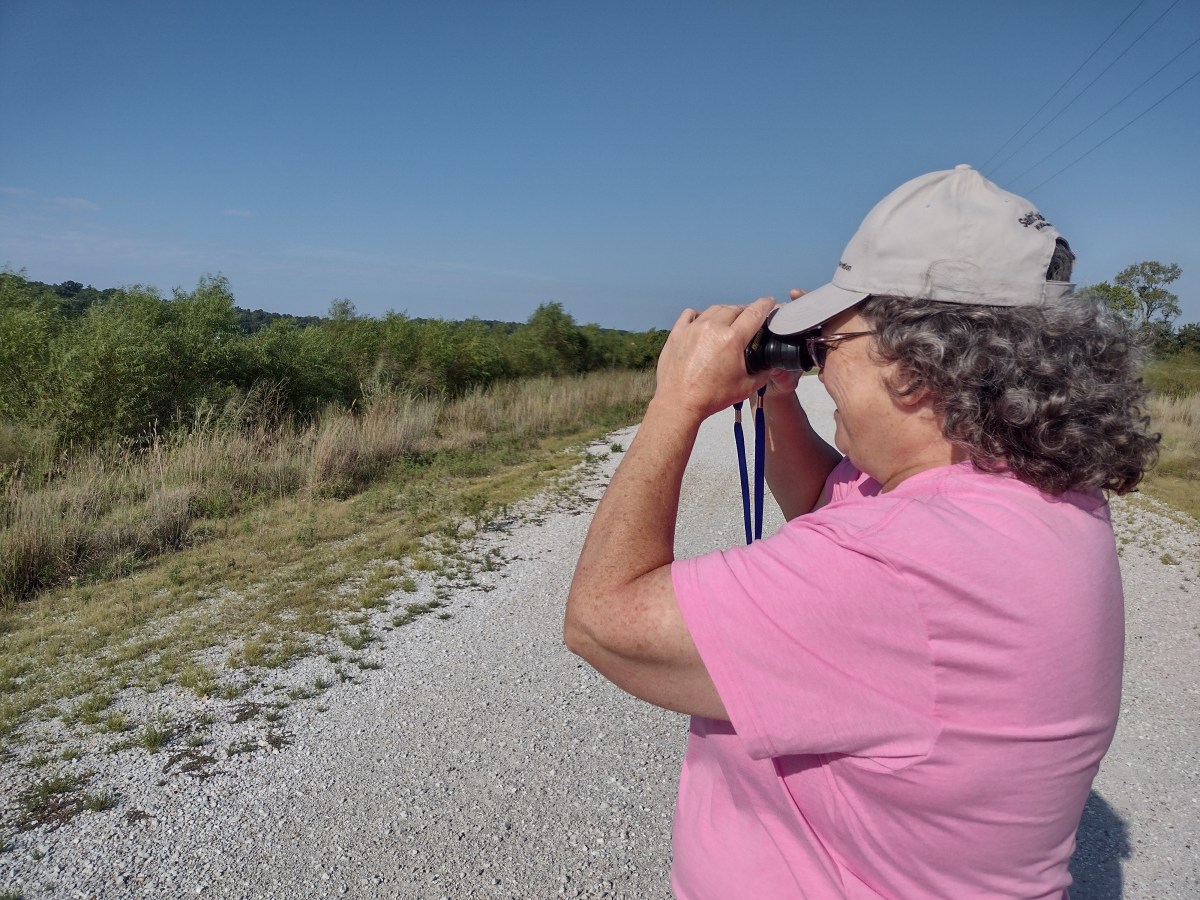
Missouri Master Naturalist Lisa Morin gazes across the Cardinal Valley Restoration Project in search of birds who call the nearly 1,000 acre site home.
For 100 years, the minerals lead and zinc were extracted from the ground in the Tri-State District. This area in Southwest Missouri, Southeast Kansas and Northwest Oklahoma initially produced wealth for small-scale operators. With time, mines consolidated then ceased operations. The final local mining operation in Webb City, Missouri closed up shop in 1957. The community was left with no more mine jobs and vast swaths of the area’s land covered in piles of mine waste, or chat.
In this episode of Mo’ Curious, you’ll meet some people who are using compost and native plantings to build soil. In the process, these Missourians are creating habitat attractive to humans, birds and other living things.
For more information about ongoing restoration work on formerly mined lands in the Spring Creek watershed, see the Missouri Department of Natural Resource’s project list here.
Finally, progress on Meredith Ludwig’s Cardinal Valley documentary can be found here.
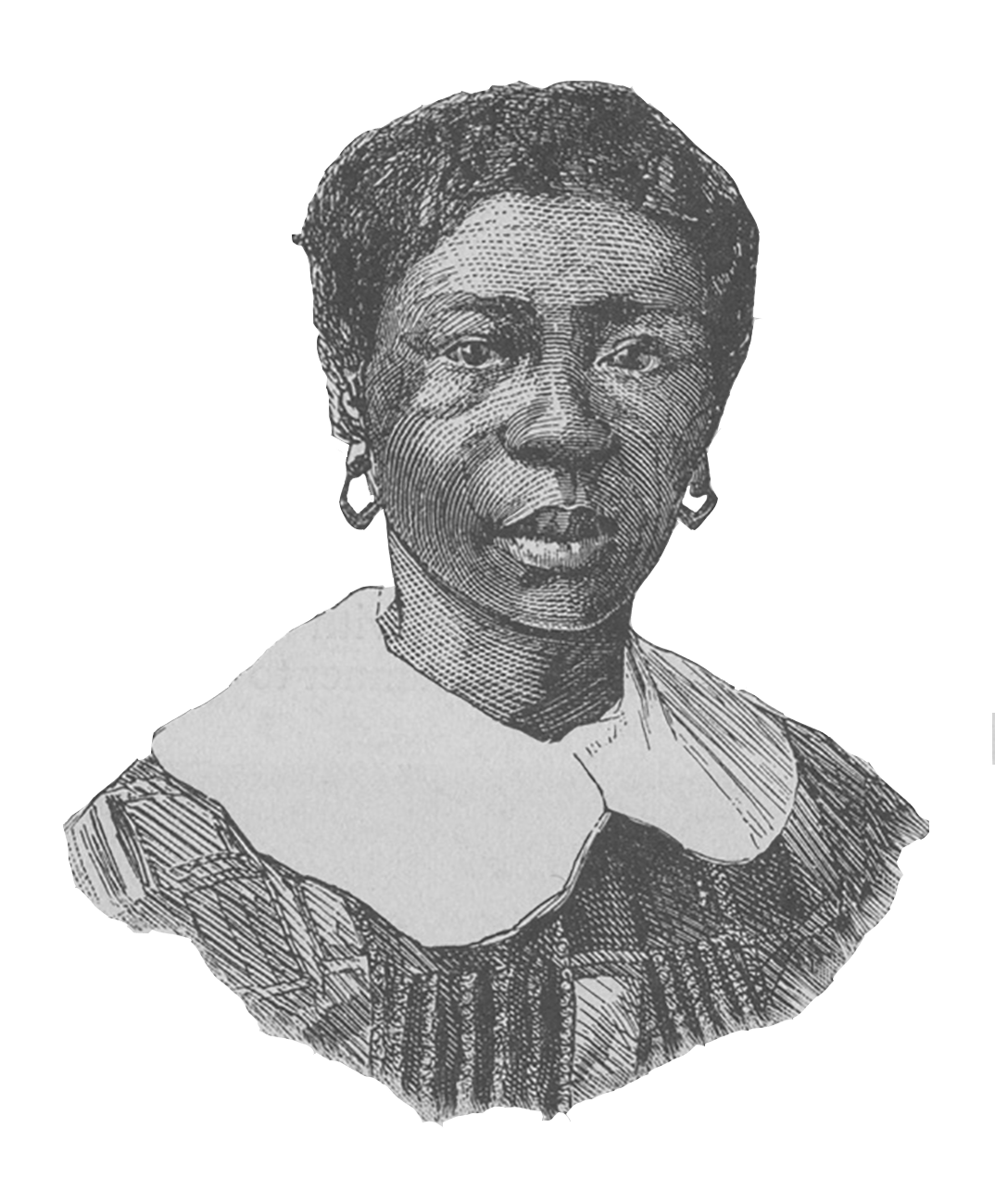
Harriet Robinson Scott’s story is part of the National Park Service’s Underground Railroad Network to Freedom. She is buried in St. Louis’ Greenwood Cemetery.Courtesy: Library of Congress. https://www.loc.gov/pictures/resource/cph.3a08392/
Before the Civil War, Missouri was territory where it was legal to own slaves. People could be bought and owned and sold. Amidst the horrors of enslavement, blacks and their allies in the region found ways to fight against the system that kept them in bondage.
On this episode of Mo’ Curious, we meet a group of historians and archivists who are researching the backstories of formerly enslaved people and are working to educate others about the lives they lived.
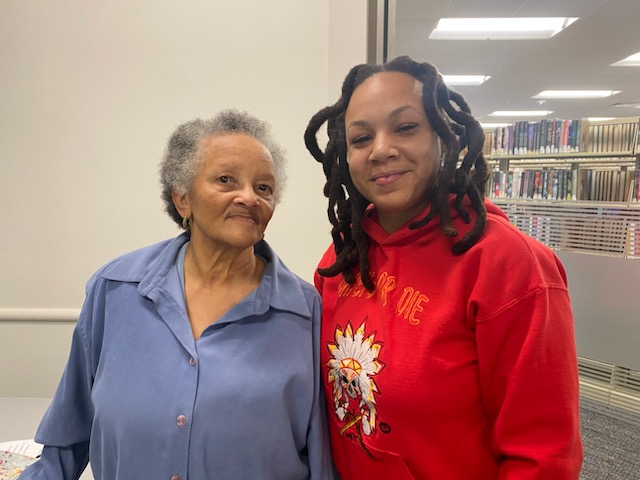
Lucille H. Douglass (at left) and Oralee McKinzy at the Parkville, Missouri Public Library in March 2023
Missouri history happened here. Right here. On this same ground on which we live today. That includes the history of slavery and racial segregation. When we tell the story of our state’s history, often the narrative is that of white and male Missourians. The family and personal stories of women and people of color are too often neglected when the narrative is told about the making of Missouri.
In this episode of Mo’ Curious meet two Kansas City women who are teaching themselves and others about local black history, which is, of course, Missouri history.
This episode’s guests are Oralee McKinzy who traces her family back to enslaved Missourians in Platte County, Missouri, and Lucille Douglass who recalls attending Parkville’s Missouri’s segregated black school as a girl in the 1950s.
Looking up at the night skies in late fall and winter requires a special devotion. One needs tenacity – plus coat and gloves at the ready – to leave the warmth of inside and go find a dark place outside. It is there that you can best (re)discover the stars and planets that have dotted our skies since before time began.
In this Field Notes segment, astronomy educator Melanie Knocke – pronounced kuh-KNOW-kee – discusses how our winter sky viewing in the United States differs from summer observing. She also shares her simple remedy for preserving the night dark skies that are required for successful stargazing.
For ongoing night sky education, EarthSky news provides “updates on your cosmos and your world.” I find it to be a useful regular e-mail in my inbox.
Thanks to Melanie Knocke for the interview. And until next time, remember, your neighbors are more interesting than you think.
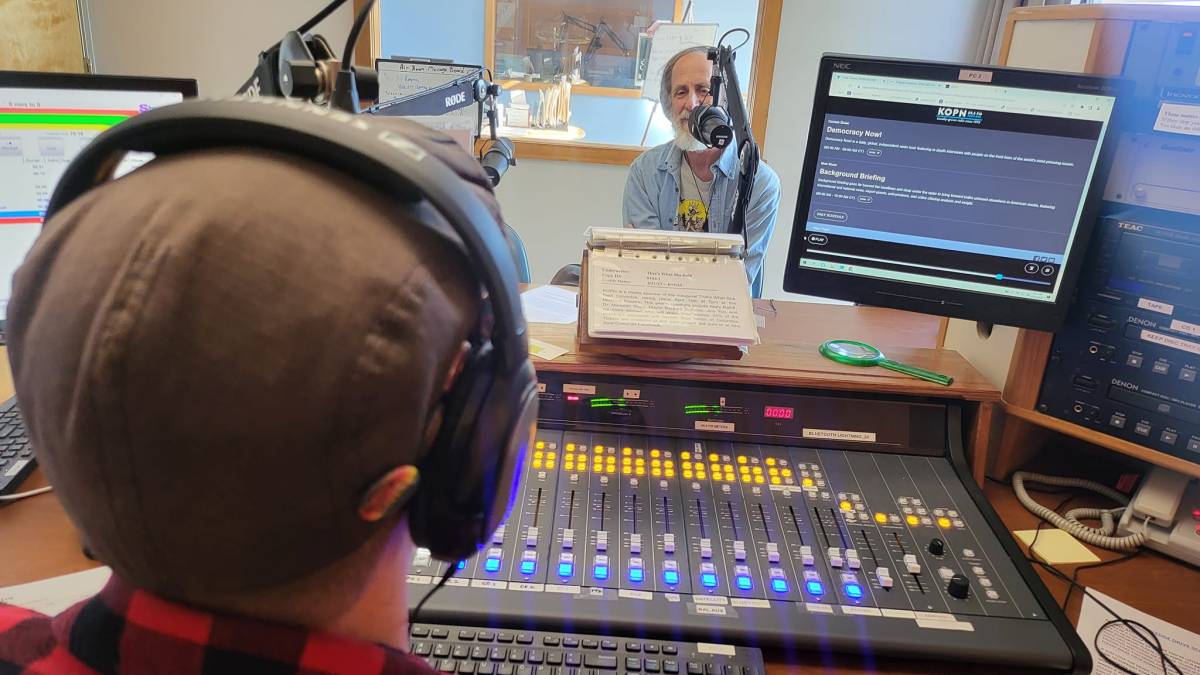
Back in 1972, radio station KOPN was founded to serve the Columbia, Missouri area. The station was licensed for broadcast early the next year and now – over 50 years later – the community radio station that wasn’t expected to survive is still going strong.
In 2022, the KOPN Oral History Project captured memories from the station’s founders, former staff and long-time programmers. This podcast episode draws from those oral histories to tell a history of the station.
An history about the life and times of Columbia, Missouri’s community radio station, KOPN.
Radio station KOPN is real and can be streamed here.
Thanks for listening to this podcast about the history of the 24th state. Catch more podcast episodes at MoCurious.com.
There is a time within memory when schools in America were segregated by race. Before 1954, the law of the land dictated that white children went to public schools and black children attended their own local and regional schools. Starting in 1955, public schools began the often painful process of bringing together black and white students in classrooms for the first time. Each community had its own story to tell. This is one of them.
In early 2022, students in Courtney Taylor’s Charleston, Missouri civics and history classes interviewed area residents with memories of this era.
As a new school year begins, it is worthwhile to listen to the recollections of these Missourians. Now community leaders and respected elders, these white and black men and women reflected on what it was like to experience segregation then integration in one small Missouri community.
These oral histories also make up a recent two-part episode of the podcast Mo’ Curious. Here are parts 1 and part 2 of that podcast.
If you are interested in histories of integration, you might also want to see this video about Chariton, County, Missouri’s former Dalton Vocational School.
“We might not have the ocean, but we’ve got plenty.”
St. Louis-based Bosnian refugee Elvir Kulovic on Missouri’s charms
Despite a great cultural disruption and numerous personal traumas, Bosnians living in St. Louis seem to be thriving.
For this podcast episode, I talked to three Bosnians living in the Gateway City about their experiences. Two are refugees and one is an academic. Their diverse perspectives offer an insight into what it means to be Bosnian in America circa 2023.
More stories from some of the 60,000 Bosnians who call St. Louis, Missouri home.
Thanks for listening to Mo’ Curious, a podcast about the history of our 24th state.
In 1973, the Doobie, Allman and Isley Brothers all had popular records. Richard Nixon started his second term as America’s president. Also that year, a community radio station in Columbia, Missouri got a license to broadcast at 89.5fm.
In 2022 and 2023 – in the run-up to the 50th anniversary of KOPN, I organized current station volunteers to conduct oral histories with former and long-time station staff and programmers. These full oral histories live here.
For 13 weeks in early 2023, I hosted a live radio show on KOPN that drew from these oral histories, mined the station’s deep and wide archives and queried a live, in-studio guest about the week’s theme. I called the show KOPN: The First 50 Years. That’s a lot of work to put in to a one-hour show, so the shows live on as a predictably title podcast KOPN: The First 50 Years.
My goal with this podcast (and the KOPN Oral History Project broadly) is to preserve the story of our community radio station and give the listener (that’s you!) an idea of what it was like in the early, heady years after KOPN’s 1973 founding.
Episode 9 features excerpts from a 2022 oral history with long-time KOPN programmer Carol Goodnick. Also, featured on the podcast is an in-studio interview with current KOPN programmer and University of Missouri Journalism School student Tadeo Ruiz and music from the KOPN archives. It sounds like the former Columbia band, Swoop…
Episode 8 explores how women have created their own space on KOPN over the past 50 years. The 59 minute episode includes an oral history excerpt from Vic Day’s April 2022 interview with Margie Sable, archival excerpts of Margie’s show, The Brazen Hussy and 1979 Women’s Weekend, and a live interview with station programmers Corri Flaker Fraser and Luna Hawk. Music on the episode is 1976 archival jazz from former St. Louis jazzers Jasmine and madrigrals from Lyn Wolz.
Episode 7 features KOPN archival selections from longtime KOPN volunteer and Columbia community activist Wynna Faye Elbert talking about Columbia’s Black history. Bringing things into the present, the episode also includes a selection from Trevor Harris’ March 2023 interview with Worley Street Roundtable team members Verna Laboy and David Aguayo. The podcast concludes with a second excerpt from the KOPN archives: a selection from Lynn Harris’ 1976 interview with Maya Angelou.
Episode 6 features an oral history with former KOPN program director, Butch Burrell and his son and former children’s programmer, Eli Burrell. The episode also features an interview with former KOPN children’s radio producer, Christine Gardener and music from KOPN-adjacent artists Rhonda Vincent and Taj Mahal.
Episode 5 features oral history form lee Ruth plus poetry from the Chez Coffeehouse and archival recordings from Lee Ruth and Cathy Barton.
Episode 4 is about the ways the folk music found a radio home at KOPN.
Episode 3 features an interview with area fiddler and author Howard Marshall and KOPN programmer Margot McMillan, archival material from the Boone County Fair Fiddle Contest, Dear KOPN letters and more.
Episode 2 features an oral history with former KOPN children’s programmer Christine Gardener and current programmer Jackie Casteel, archival material from Inside Radio featuring Eli Burrell and Brother Blue plus live in-studio guests, including Ann Mehr, Sarah Catlin and Dante Dupuy.
Episode 1 looks at KOPN’s history with prison issues and features oral histories with James Robnett and Jim Austin, an archival feature about Renz Women’s Prison and guests Peggy Placier and December Harmon.
Over 60,000 Bosnian refugees and their children live in St. Louis area. They have a significant influence on the region’s economy, religious life and culture.
In this episode of the Mo’ Curious podcast we meet four Bosnians making sense of their past and mapping out their future as members of two cultures: Bosnian and American.
Here is the story of some of the Bosnians who now call St. Louis, Missouri home.
Music in this episode was from the Bosnian-St. Louis band, Albosy. Here’s a fuller dose of the band:
More episodes of the podcast are available at MoCurious.com.



 The Recollection Agency