
Categories
Mo-Curious

Mo’ Curious: Black Stories Matter

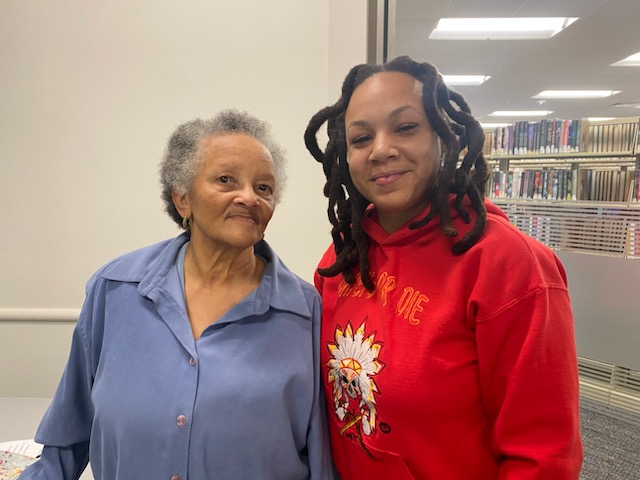
Lucille H. Douglass (at left) and Oralee McKinzy at the Parkville, Missouri Public Library in March 2023

Missouri history happened here. Right here. On this same ground on which we live today. That includes the history of slavery and racial segregation. When we tell the story of our state’s history, often the narrative is that of white and male Missourians. The family and personal stories of women and people of color are too often neglected when the narrative is told about the making of Missouri.

In this episode of Mo’ Curious meet two Kansas City women who are teaching themselves and others about local black history, which is, of course, Missouri history.

This episode’s guests are Oralee McKinzy who traces her family back to enslaved Missourians in Platte County, Missouri, and Lucille Douglass who recalls attending Parkville’s Missouri’s segregated black school as a girl in the 1950s.

As heard in this episode of the podcast:

Dr. Jimmy Johnson in ‘History of Kansas City International Airport Land and Its People’ produced by the Kansas City Museum

Thanks for listening to Mo’ Curious. Stay curious, Missouri.
Categories
Field Notes

Field Notes: ‘Charity, like in faith and hope.’

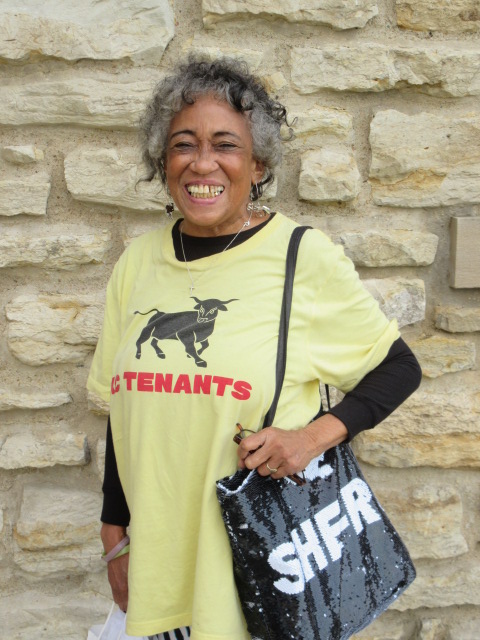
We’ve lost a lot in the pandemic to date. Many Americans have lost their jobs, their health, their loved ones. When the rent came due and her fellow Kansas Citians faced eviction, Diane Charity helped organize tenants to fight from losing their homes, too.

In this Field Notes, Ms. Charity talks about her mother’s influence on her activism, the culture of sharing at Parade Park and why she still fights the good fight.

We talked on March 26, 2021 at Kansas City, Missouri’s Black Archives of Mid-America.

Categories
Mo-Curious

Mo’ Curious: The View from Beacon Hill

In 2019, my wife and I moved to Kansas City for her new job. We wanted to live in a real neighborhood with real people. We needed to dwell near enough downtown for her to walk and bike to work. The house we rented was in Beacon Hill. From our earliest days on Tracy Avenue, I immediately saw two neighborhoods existing in one urban space.

As the middle class fled Kansas City’s urban core after 1970, Beacon Hill’s fortunes changed. Many families and retailers decamped for greener suburban pastures. Numerous families stayed put in Beacon Hill. In recent years these long-timers had increasingly been joined by the likes of my wife and I: younger and mostly white professionals. Renters like us tended to drive up prices in the local rental housing market. Growing numbers of newcomers to Beacon Hill had bought available lots, then built and occupied new homes. These homes commanded prices previously unheard of in the 64108 zip code.

At my first neighborhood meeting, I met the leadership of the Beacon Hill/McFeders Community Council. These women had spent decades in Beacon Hill and raised families there. They were eager to share their neighborhood memoirs. In 2020 and 2021, seven long-time neighborhood residents discussed how their part of Kansas City had changed during their years there.

Drawing on oral histories conducted at the Black Archives of Mid-America in 2020 and 2021 this episode of Mo’ Curious podcast draws on the cultural memory of Kansas City’s Beacon Hill, one of Missouri’s urban neighborhood in transition.

Categories
Field Notes

Field Notes: ‘Why would I be looking for you?’

This Field Notes post looks at the personal impacts of the coronavirus. Dr. Carmaleta Williams, the director of the Black Archives of Mid-America discusses holding picture parties, interviewing the elders and being the art teacher for a pair of her instantly home-schooled grandsons.

This audio is taken from a phone conversation of April 21, 2020.

Check out more Kansas City Black history by viewing the Beacon Hill oral history project here.